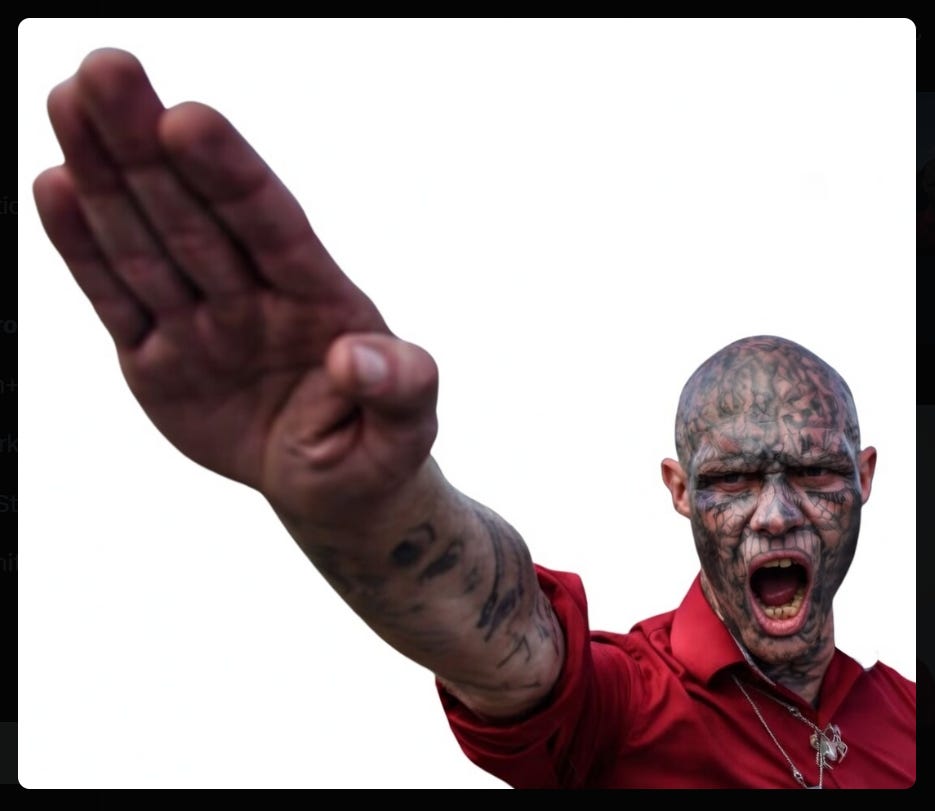
KENT McLELLAN (BoneFace): The Physical and Psychological Decay of Neo-Nazi Ideology

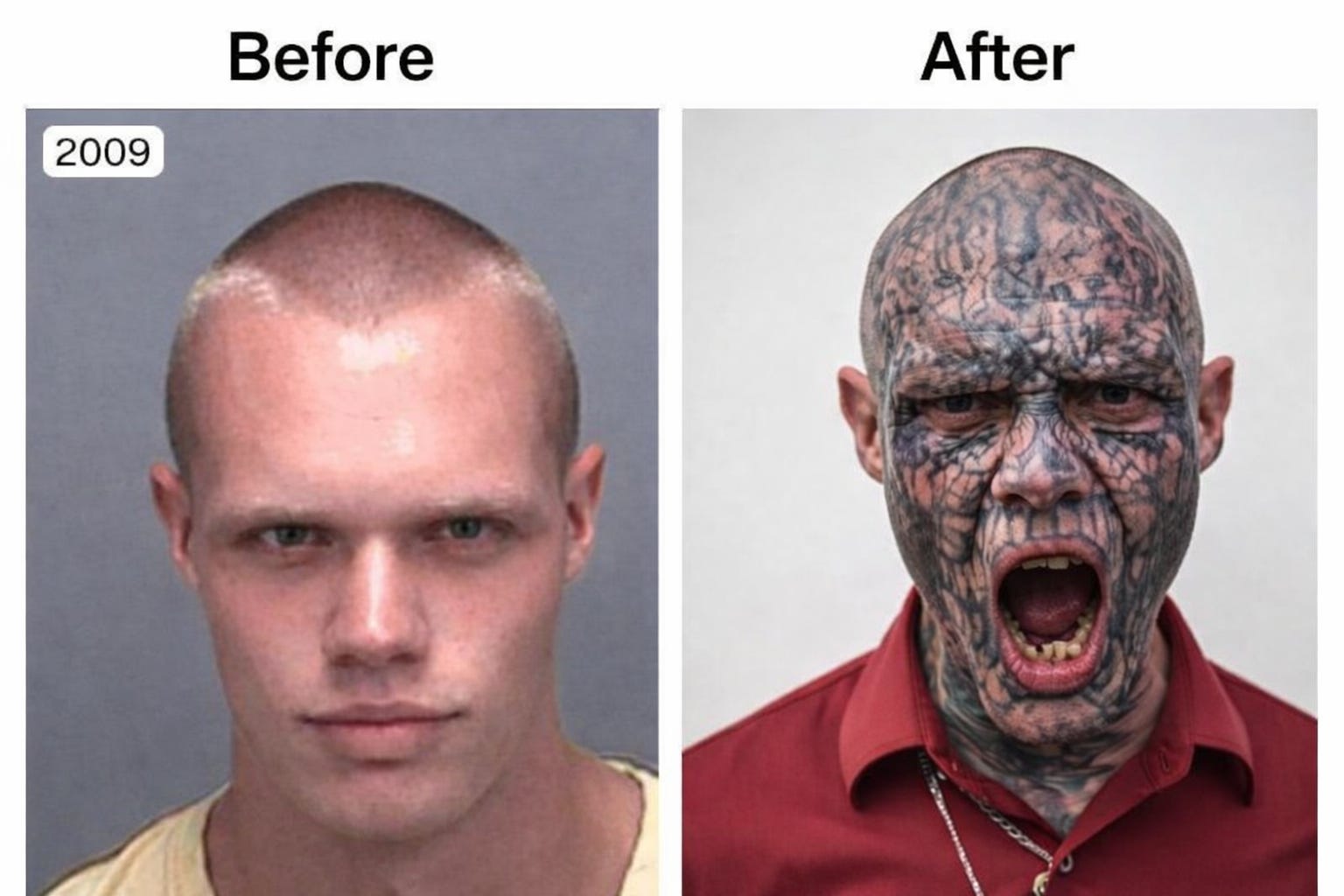
Kent McLellan, better known online as “BoneFace,” is a case study in how extremist ideology corrodes identity, credibility, and ultimately reality itself. Kent McLellan (BoneFace) is what happens when Jew hatred is allowed to rot out a person’s brain until delusion replaces truth and spectacle replaces substance.
The contrast is stark. Earlier photos show a young dude with conventional, striking features, the kind of face that could have easily fit into professional modeling or film casting. Instead of building a future, McLellan chose annihilation by ideology. What remains today is a heavily tattooed figure whose appearance is deliberately engineered to shock, intimidate, and repel—a walking billboard for extremism whose look lingers like a bad dream.
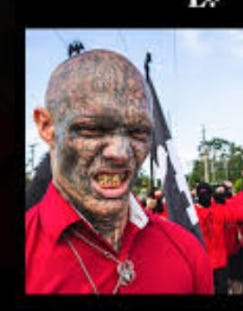
In 2024, McLellan was thrust into the spotlight during what was supposed to be the largest neo-Nazi show of force in the United States this year. The rally, organized by the Goyim Defense League (neo-Nazi group) and the Blood Tribe (neo-Nazi group) in Orlando, Florida, drew roughly 100 extremists across multiple demonstrations. Marching in red uniforms, screaming racial slurs, and attempting to project unity, the event was already grotesque. Then it imploded.
At the center of the collapse stood BoneFace.
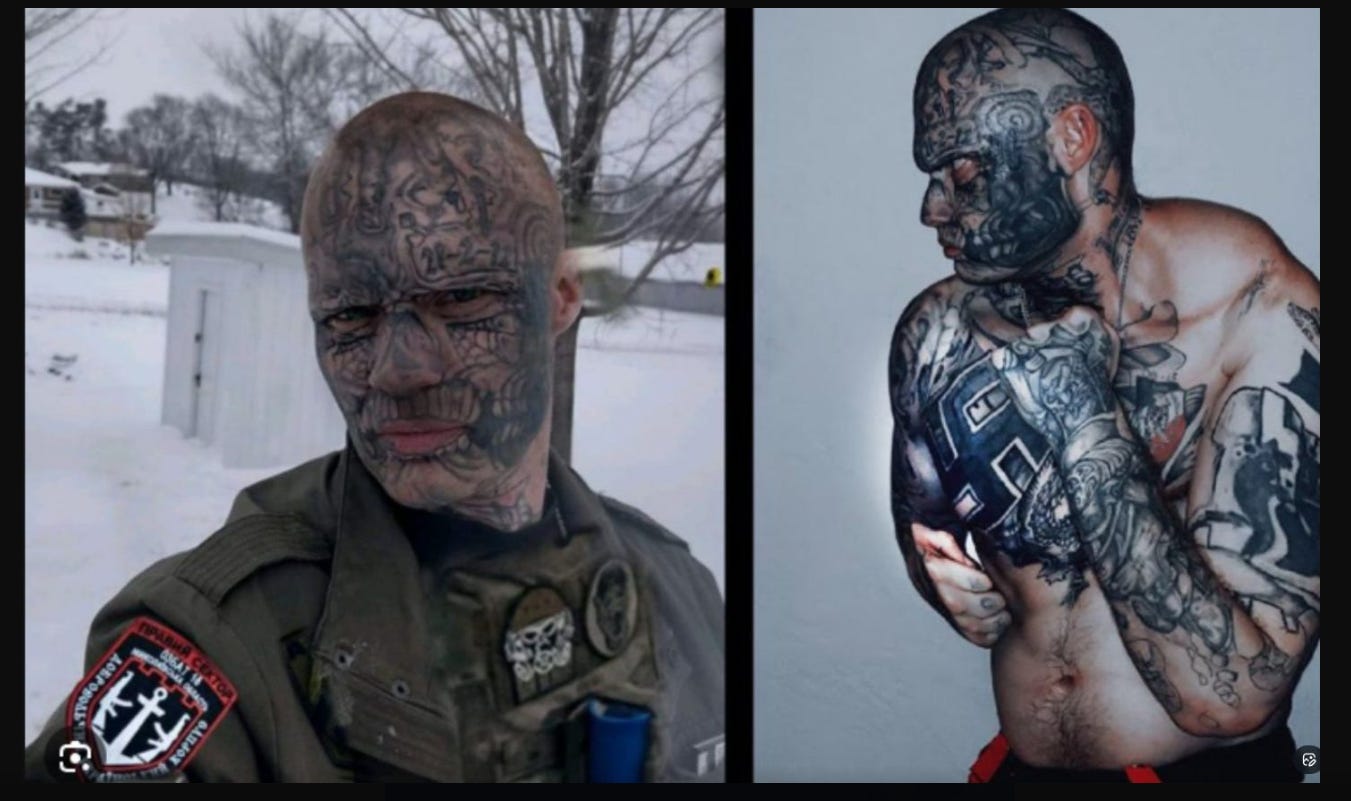
Marching beside Christopher “Hammer” Pohlhaus (neo-Nazi leader), McLellan’s tattoo-covered face made him impossible to ignore. Neo-Nazis initially loved it. They promoted him aggressively, pushed him to the front of marches, and elevated him on podcasts and Telegram channels. He was marketed as a hardened extremist warrior, allegedly having traveled to Ukraine to fight with the Azov Battalion, boasting of dozens of confirmed kills, and presenting himself as living proof of violent commitment to the cause.
None of it held up.
Far-right influencers—many desperate to spin the rally as a federal “false flag”—began scrutinizing McLellan. His claims unraveled fast. The supposed Ukraine war photos were exposed as crude photoshops. No credible evidence supported his battlefield stories. His myth collapsed under even minimal scrutiny.
What emerged instead was a familiar reality: a long criminal record, including arrests related to paramilitary training, meth distribution, battery, and burglary. Not a fearsome revolutionary, but a habitual offender wrapped in fantasy and ink.
The backlash was immediate and vicious. Neo-Nazi Telegram channels turned on him overnight. Pohlhaus issued apologies for failing to “vet” McLellan and shut down chats to contain the damage. New channels appeared dedicated solely to mocking BoneFace as a “larper,” an embarrassment, or a possible informant. The movement that briefly worshipped him discarded him just as quickly.
BoneFace’s rise and fall exposes the hollow core of modern neo-Nazism. Violence, drugs, and criminality are tolerated—sometimes celebrated—but lies that disrupt internal mythmaking are unforgivable. Image matters more than truth, and loyalty lasts only as long as the fantasy holds.
In the end, McLellan didn’t just disfigure his face. He erased any future he might have had. His story isn’t one of strength or rebellion. It is a warning: extremism doesn’t make people powerful—it makes them disposable.